برچسب: Smuggling of Goods

  • Discovery of 1,650 billion tomans worth of contraband goods in the warehouse monitoring plan

    Discovery of 1,650 billion tomans worth of contraband goods in the warehouse monitoring plan


    According to the economic reporter of Fars news agency, Hamidreza Dehghaninia, the spokesperson of the headquarters for combating goods and currency smuggling, in a television interview about the new plans to deal with goods smuggling, stated: In the past years, the headquarters, together with various agencies, has been serious about the supply of smuggled clothing. entered and some of the smuggled commercial brands were collected from the market. These encounters caused the amount of smuggled clothing in the country to decrease to 1.8 billion dollars.

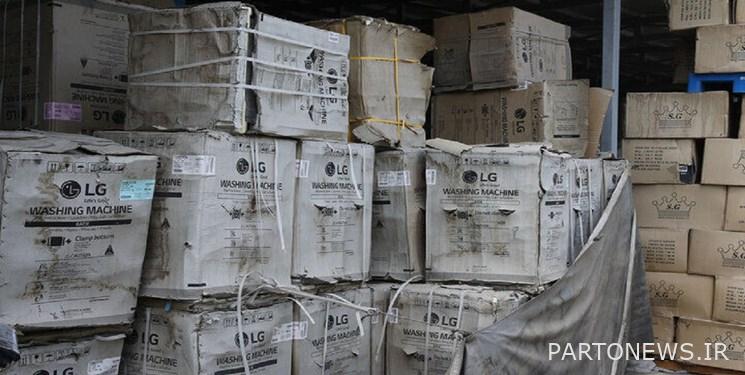
    Referring to the implementation of warehouse monitoring plan (Shahid Sadrzadeh) in recent days, Dehghaninia said: After the implementation of this plan, nearly 1650 billion tomans worth of contraband goods, most of which were household appliances, were discovered and confiscated in the warehouses of Tehran’s Shurabad area. This plan will be implemented continuously and is not only limited to the bottleneck of the warehouse and also includes the supply level.

    He added: Anti-trafficking plans at the supply level are implemented due to the technical infrastructure created in previous years. So that it provides the possibility for officers and inspectors to distinguish contraband from non-smuggled goods. We also warn those who continue their economic activity by buying and selling contraband goods that they will be dealt with by the regulatory bodies.

    Dehghaninia continued: For example, before the fight against smuggled trademarks in the field of home appliances and clothing, when we talked to the producers’ association of these goods, they were very dissatisfied with the presence of smuggled goods in the supply level; But after the implementation of anti-smuggling plans, both their workers were re-employed and the quality of products increased.

    * Necessity of updating the laws against goods smuggling

    The spokesman of the Headquarters for Combating Goods and Currency Smuggling, while referring to the phenomenon of smuggling and the laws that have been approved and updated to deal with it, said: The first anti-smuggling law was enacted in 1312, and this law remained silent for 62 years. In 1374, a law was approved by the Expediency Council, which was related to the way of applying government punishments; But unfortunately, with the approval of this law, nothing special and new happened in the fight against smuggling.

    He added: “Unfortunately, no new law regarding smuggling was passed from 1374 to 1392, and the approval of the first comprehensive law in the field of combating goods and currency smuggling dates back to the end of 1392.”

    The spokesman of the anti-trafficking of goods and currency continued: In 1394 and 1397, the anti-trafficking of goods and currency law was evaluated and amended, and finally this law faced the last amendments in February 1400.

    Dehghaninia stated that the smugglers are adapting to the new laws and stated: the reprehensible phenomenon of smuggling due to its fluidity causes the smugglers to find new ways to evade the laws; Therefore, it is necessary to make the desired updates on the rules to adapt the rules to the conditions.

    Referring to the need to fight smuggling for the growth of production in the country, he said: first, we must legally ban the import of goods that have domestic equivalents. In the next step, distinguishing contraband from non-smuggled goods should be made possible and provided at the level of supply, storage and other bottlenecks.

    * The powers of the president’s representative in the headquarters were increased

    While referring to the appointment of the President’s special representative in the headquarters to combat goods and currency smuggling, he said: According to Note 2, Article 3 of the Law on Combating Goods and Currency Smuggling, the President appointed Mr. Razavi as his special representative in the headquarters.

    The spokesperson of the Headquarters for Combating Goods and Currency Smuggling further added: The President has assigned special powers to his representative in the headquarters, which was not available to the Headquarters for Combating Goods and Currency Smuggling in the previous periods, and this issue causes the agency to The headquarters should increase in dealing with smuggling in a special way.

    Dehghaninia stated: Rial convictions in the area of ​​dealing with smuggling in 1401 increased by 100% and reached 24,500 billion tomans from 12,295 billion tomans; Also, we have had a 76% increase in crime collection and its amount has reached 2365 billion tomans from 1343 billion tomans.

    end of message/


    Suggest this article for the first page

  • Achievements of the implementation of the plan to fight against the smuggling of goods and currency in the capital / destruction of the gang of preparation and distribution of counterfeit dollars

    Achievements of the implementation of the plan to fight against the smuggling of goods and currency in the capital / destruction of the gang of preparation and distribution of counterfeit dollars


    Mostafa Pourkazem In an interview with the economic reporter of Fars News Agency, referring to the implementation of the plan to combat the smuggling of goods and currency in August of this year in Tehran, Shaisheta stated: from August 24 to 26 of this year, the plan to combat the smuggling of goods and currency with priority for customs goods, tobacco and transit and monitoring and his foot Warehouses and warehouses were implemented in Greater Tehran.

    He continued: As a result of the implementation of this plan, a significant amount of contraband worth more than 20 billion Rials was discovered and confiscated.

    Pourkazem Shaisheta added: This plan is based on intelligence monitoring, identifying and extracting the addresses of warehouses in Tehran and Ray and with judicial coordination and forming joint teams with the organization. silence And government punishments and maximum use of police power were carried out.

    The head of the central headquarters for dealing with the smuggling of goods and currency at the supply level added: In this action, 140 joint teams with a capacity of 420 people and using 120 operational vehicles were carried out, and in this regard, 17 warehouses were raided. plumb14 vehicles were seized and 39 cases were filed with the arrest of 46 people.

    He stated: In this action, a gang producing and distributing fake dollar bills was destroyed and 10 million dollars worth of fake bills in the form of 100,000 pieces of 100 dollar bills worth three thousand billion Rials were seized.

    end of Payam/T 58


    Suggest this article for the first page

  • The damage to the economy from the previous government’s delay in implementing the anti-trafficking law

    The damage to the economy from the previous government’s delay in implementing the anti-trafficking law


    According to the economic correspondent of Fars News Agency, without a doubt one of the main onesMost The country’s economic problems in recent years have been exchange rate instability, an issue that seems to have been unaffected by managerial changes at the highest levels and still engulfing the energy of most of the country’s executives.

    However, in all these years, especially during the 1990s, “oppressive sanctions” have dominated the foreign exchange market as a major factor.Radiation But the evidence shows The lack of determination of executive managers in improving the country’s currency balance, as well as the non-implementation of some regulatory laws in the field of economy, such as the law against combating smuggling of goods and currency and the law against money laundering, have contributed significantly to deepening some of these problems.

    In other words, since the only operational plan of the previous government to solve the economic problems was Borjam and interaction with the West, so the withdrawal of the United States from Borjam in 1397 caused the country many problems; On the other hand, all the remaining 3 years of the previous administration were spent dreaming of the return of the United States to Borjam, and the result of this policy was only a sharp decline in the country’s foreign exchange earnings.

    Meanwhile, in the first months of its activity, the 13th government is trying to provide the necessary ground for some economic reforms by controlling liquidity and effectively monitoring the circulation of the rial. Apart from this, the President’s strict order to combat smuggling of goods indicates that the executive’s view of economic problems is more pathological than in the past.

    At present, according to official statistics provided by the Anti-Trafficking in Goods and Foreign Exchange Headquarters, about 10 to 12 billion dollars of smuggled goods enter the country annually; This is while, for example, the total export of goods in 1999, barely reached $ 34 billion. It is no secret that the continuation of this amount of smuggling, taking into account at least $ 40 billion in official imports, has painted a dark outlook for the country’s currency balance.

    For this reason, smuggling of goods is always mentioned as one of the causes of turmoil in the foreign exchange market; Because the demand for currency increases sharply in the free market. Of course, the increase in demand for foreign currency is only one of the disadvantages of smuggling goods, and the increase in unemployment and the reduction of GDP are other consequences of smuggling for the country’s economy.

    * Abandon the actions of the devices in the implementation of the law against smuggling of goods and currency

    With the enactment of the Anti-Trafficking in Goods and Foreign Exchange Law in 1992, it was hoped that the legal loopholes to deal with this ominous phenomenon would be filled, but with the delay and lack of determination of relevant officials to fully implement the provisions of this law, except for one or two commodity groups such as mobile phones. In which effective measures were taken to prevent the entry of smuggled goods into the country, there was practically no success.

    A law that provided inspectors, supervisors, and officers with the ability to separate genuine goods (imported or manufactured) from smuggled goods by setting up information systems and providing strong legal backing and enforcement guarantees. Eliminate an important obstacle in the path of production mutation.

    But now we see that despite the fact that more than 9 years have passed since the adoption of this law and also the completion of a significant part of the related systems and the establishment of the necessary infrastructure, still a major part of the markets of “home appliances”, “clothing”, “tobacco”. “Cosmetics” and “spare parts” are in the hands of smuggled goods.

    On the other hand, due to the lack of full implementation of the law on combating smuggling of goods and currency, the sale and purchase of currency in the open market has grown in such a way that even in small cities this process is ongoing. In other words, abandonment of the law and non-implementation of the law has caused the purchase and sale of currency in the open market to spread from Ferdowsi Square in Tehran to the whole country, and with the continuation of this process, we should see the free market of rural currency.

    “Prohibition of tomorrow’s transactions”, “Emphasis on the return of foreign exchange from exports” and “Explicit reference to the unnecessary transportation and storage of foreign exchange as an act of smuggling” are among the cases in which Makes it smoother than in the past.

    * Is the fight against smuggling intensifying?

    According to Fars, former President Ibrahim Raisi; With the promulgation of the 9-point instruction on February 20, last year, all agencies related to the Anti-Trafficking in Goods and Foreign Exchange Law were required to take the necessary measures and measures to combat smuggling.

    On the other hand, at the end of April this year, “Law Amending the Law on Combating Commodity and Currency Smuggling” by Mohammad Baqer قالیباف, Speaker of the Islamic Consultative Assembly, was notified to the government; Based on this, the executive bodies got acquainted with their latest tasks in the field of combating trafficking.

    In this regard, Yasser Savadkoohi, Director General of the Office for Coordination of Countering and Monitoring the Financial Flow of Smuggling of the Central Headquarters for Combating Commodity and Currency Smuggling, says: The car will be done extensively.

    It seems that Finally Over the years, the process of combating smuggling of goods and currency has come to the attention of executive officials.

    Therefore, if the smuggling of goods across the country intensifies, it can be said that the consequences of this economic damage will gradually decrease.

    end of Message/


    Suggest this for the front page

  • The major smuggler himself is not on display and exposed / smuggled goods must be destroyed

    The major smuggler himself is not on display and exposed / smuggled goods must be destroyed


    According to Fars News Agency, ‌ Ali Soheili, the former deputy head of the Anti-Trafficking Headquarters, said in the fourth part of his interview that the smuggled goods should be destroyed instead of being consumed in the country or re-exported. They do not showcase and the goods are made in the name of another person.

    * Do you not know what was the reason for the ministers not to implement this law?

    One of the issues that was announced was the inability to identify smuggled goods. The claim of these ministers was that it is not possible to implement this law at the moment, our ability is not enough to implement this law, and it will cause problems for the country, and this law will somehow become a brake on the economy and will harm our trade!

    * In the last seven or eight years, no measures have been taken to remove the obstacles raised by the ministers in order to eliminate possible excuses for the implementation of this law?

    Here’s a top manager who must both make the right diagnosis and make the right decision; In recent weeks, for example, the Minister of Health has written to the President regarding electronic copying, giving the Ministry of Health another deadline to implement this issue. But I think the president made a smart and decisive decision and opposed it. The Ministry of Health has been given the opportunity to do this for five years, is not five years a short time? When the minister wants an opportunity, he does not mean an opportunity of one or two months. When you have not been able to do this in five years, it means you want to delay it again for a long time. Issues must be dealt with decisively and intelligently, regardless of whether the new government has been in office for a short time.

    For example, on the issue of the mobile registry, at the same time that this was supposed to be done, the three ministers wrote a letter that this plan is not operational and if implemented, there will be problems and we will have problems. Due to these objections, the issue was dropped and the registry was not enforced. Failure to implement the registry in previous years has deprived the country of at least a few hundred million dollars in tariff revenue for about seven or eight years. But we saw that a few years later, without any new developments or new technology in the world and Iran, this plan was successfully implemented. It was the careful and courageous management that led to the implementation of this plan. This plan was delayed for about ten years, and the only reason was that the management team was not willing to spend time, to put pressure on themselves, to endure hardship to get the job done.

    * On the subject of smuggling, have any studies been conducted on other countries with similar economic conditions to ours? For example, that a country has been able to fight trafficking and be successful in this fight.

    Incidentally, the headquarters has done good work and studies in this field and has published booklets on the experience of several different countries in the fight against trafficking. There are a few points in this regard: First, few countries have our conditions that have, for example, 15 neighboring countries. The second point is that most countries have brutal strictures, that is, when they make a law, they are very keen to implement that law. This creates sufficient deterrence for offenders; Strict and strict enforcement of the law prevents deterrence and minimizes violations. The third point is that the trade of many countries is transparent based on the technologies they have, and the transparency in these countries is very high. The fourth point is that the conditions of our country are special; Issues such as sanctions can upset our country’s economy as much as its own weight, however, most countries in the world do not face this problem. When you are sanctioned, whether in monetary, banking or commodity matters, this practically derails your exchanges; This will happen to any country that is sanctioned. For example, when you have a factory but normal conditions are disrupted, you have no choice but to enter the black market or the hidden economy. You have to supply the materials needed by your factory. When it becomes difficult to obtain raw materials through legal means, you either have to close your factory or otherwise seek to supply the materials needed by your factory.

    * As for the identification of goods as a way to identify smuggled goods, the dew scheme was implemented in the ninth and tenth governments, and at the beginning it was able to create some deterrence, or at least increase the costs of smuggling. In the 11th government, dew was collected in the name that this plan would not work and that another plan was to replace it; But to date, no alternative plan has been introduced.

    There have been two relatively logical views in this regard; First, the dew design and software has problems and its problems must be fixed. Second, the design and software of the dew is not possible to develop and modify and is basically inefficient; So it has to be replaced by a completely different design. If either of the above were the case, we should have an efficient plan now! But unfortunately, with recklessness and a wrong look, we fell behind in this issue again for years.

    In my opinion, the truth of the matter is that the neoliberal and free market view is not compatible with this kind of design, this view finds such tools quite annoying; Of course, they can not explicitly state these positions, but they oppose any plan that is similar to this debate and believe that these plans should be withdrawn. In this case, the principle of opposition was in this direction. This can also be due to a conflict of interest.

    In general, unfortunately, the umbrella of neoliberalism, especially after the end of the holy defense, has cast a shadow over the Iranian economy and will not abandon it. The negative effects of this view are also felt in the fight against trafficking.

    Another example, The story was the fuel card. They explicitly collected the fuel card In the neoliberal view, there is no need for these professions, the market itself solves these problems, the neoliberal view basically despises these issues. Logic says that as long as you do not have an alternative plan, you should not abandon the plan that is being implemented, unless the harms of implementing that plan outweigh the benefits, now have whatever look you want!

    * Over the years, regardless of the amount and percentage, we have made significant discoveries in the field of trafficking; As a result of these discoveries, people have been arrested and a series of goods have been stopped. Have the investigations of the traffickers shown any indications as to which centers they are connected to or where they are supported, etc.?

    There was a subject in the headquarters called important and large cases that was followed up. In many of these cases, the traffickers had supporters and associates. Famous and reputable people, consciously or unconsciously, supported and associated with these people. As I said before, at least the presence of these smugglers in the homes of some people or the photos they took with these people had its own functions and exploits.

    * Famous, well-known or influential people certainly do not smuggle themselves directly, smugglers may be their force. Did you reach such people from the reviewed cases?

    Often the major smuggler himself is not on display; His presence is not a field presence and does not leave any evidence, name or document, his subdivisions do these things. It has been observed many times that when smuggled goods are confiscated, people are introduced to the court who have a so-called mission to do so and they are referred to as “sleep prisoners”!

    In the case of trafficking, we are faced with a phenomenon called sleep imprisonment; That is, people who take money to say that the smuggled goods are for them. These individuals were imprisoned for a maximum of two years, during which time their main living expenses were paid for by the main trafficker and they received a considerable amount of money. (This issue was very common at that time, but it still exists today.)

    Let me make a point about this. In these cases, they say, punishment should be deterrent. Krosinski wrote about the Safavid era that punishments were deterrent; The punishment for rich people who committed crimes was flogging, and the punishment for poor people was fines. This punishment means a deterrent punishment; But now our punishments are often not deterrent. The fine figures are sometimes like a joke, someone who has hundreds of billions of tomans of wealth is naturally funny when he is punished with money and fines, especially the minimum, imprisonment for a professional sleep prison is a gift!

    * The fight against trafficking in Iran formally and systematically is about two decades old. Have the people who have been arrested over the years helped the headquarters in the fight against trafficking? During these years, the ways of securing smuggling resources, the methods of smugglers, etc. have probably been identified. Naturally, after gaining experience, the process of fighting this path must improve. Where is the main problem?

    The process and route of the fight against trafficking has improved in accordance with the information that you receive, and you will update the course and course of your fight over time. Therefore, you are right. With the increase in information, the way of fighting has also improved; But there is a statement that offenders are always one step ahead of the law. This is almost a correct phrase, because when you fight against an illegal act, it means that you know the way to fight it or you should know it. Naturally, criminals discover new ways and enter through other ways. When the law blocks those paths, criminals seek new paths. Delinquents always use innovation and creativity, and you will go against that innovation as a rule. Now what should we do to take a step ahead of the offenders? Because the law and the person who has to stop these violations are facing problems and shortcomings, including competent managers and quality and expert forces, this makes it impossible to take a step forward from the criminals.

    Define an interesting memory. In 1986, we were among thirteen graduates of Sharif University of Science, Technology and Khajeh Nasir, some of whom also had managerial backgrounds. I suggested that my friends write the challenges of the country in a mental storm method without any presuppositions. After collecting opinions, about 60 challenges were counted. After weighing and prioritizing, the first challenge of the country was unanimously declared “lack of meritocracy”! It means not putting everyone in their place! What was more interesting was the fact that as meritocracy materialized, about 17 of the next challenges would disappear on their own; No need for special law, special cost and special manpower.

    in one Sentence; I have rarely explored the challenge that the best solution is something other than meritocracy. The main catch is here!

    * In one of his speeches on the subject of smuggling, the Supreme Leader of the Revolution referred to the issue of extermination and burning of smuggled goods. It seems that this does not happen in the country and some people are misunderstood! The smuggled goods are not destroyed and sometimes they are even used in some government agencies and institutions. What do you think about this?

    This is an important issue. Unfortunately, there was a delay in this matter and the officials did not have an accurate scientific and logical diagnosis of what happened. Lack of recognition means that some people say that it is better to consume these goods domestically, but these people do not pay attention to issues related to macroeconomics and commercial calculations. Those new to the subject may say that these goods (for example) can provide at least some food for the hungry or the needy, but the Supreme Leader of the Revolution has rightly set out a clear solution to the question of whether or not these goods should be discovered if they are discovered. They should be re-exported or they should be destroyed. In any case, smuggled goods should not enter the country, as it can disrupt all calculations related to supply and demand and the country’s products.. The world does the same; Of course, in very exceptional cases, there is another possibility.

    End of message / b

    .
  • “Ahmad Osanloo” became the head of the government penitentiary organization

    “Ahmad Osanloo” became the head of the government penitentiary organization


    According to Fars News Agency, the Minister of Justice appointed Ahmad Osanloo as the head of the State Penitentiary Organization.

    Commemoration ceremony of Jamal Ansari, former head of the State Penitentiary Organization, and introduction of Ahmad Osanloo, Deputy Minister of Justice and new head of the State Penitentiary Organization, attended by Amin Hossein Rostami, Minister of Justice, Hassan Darvishian, head of the General Inspection Organization, Moayedi Managers of the National Inspection Organization as well as deputies and managers of the Government Penitentiary Organization were held.

    Osanloo has previously been the legal and inspection inspector general of the country.

    End of message /

    .