Actors prefer high salary to theater
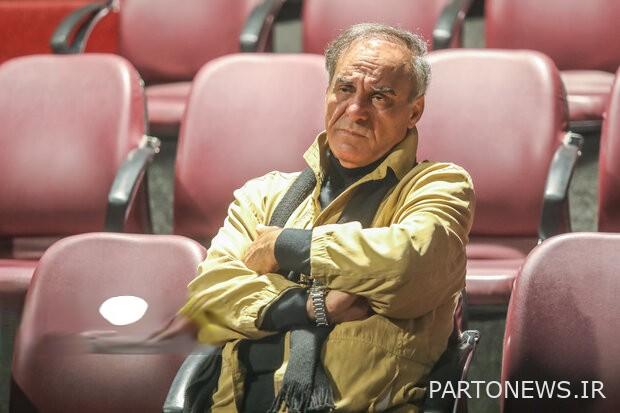
The director of the “Blood Wedding” show, which is on stage in Iranshahr Theater, mentioned this work as the result of a workshop with young people who are talented and talented in theater.
Charso Press: Qutbuddin Sadeghi, a well-known Iranian theater writer, teacher and director, who has staged the play “Blood Wedding” with the presence of a group of young theater artists in Iranshahr’s theater hall since 4 Mehr, said about the selection of Lorca’s work for performance: “Wedding” I translated “Blood” by myself and removed many parts from the text and added parts to the text to bring the text closer to today’s Iran. The show “Blood Wedding” is performed with a duration of about 75 minutes, while the original text requires 180 minutes to perform. I had performed “Blood Wedding” at “Shanu” Academy as the students’ final work. At first, I wanted to produce a work with the theme of war and classics, but I thought about why we are oblivious to love.
He noted: Now is the best time to deal with love because the society is going through a crisis and a big time, and something that should not be neglected is love. It is important to preserve inner emotions and feelings, that’s why I went to “Blood Wedding”.

Sadeghi stated: Lorca is the one who writes about love, and at the same time, there is a kind of rebellion in “Blood Wedding”, which was what I was thinking about along with the 4 distinct characteristics of the central character of the show.
This artist with a background in Iranian theater explained about the formation process of the “Blood Wedding” show: “Blood Wedding” was formed in a workshop. This show is not based on commercial theater faces and commercials because I hate that. Many theater greats such as Grotevsky also avoided commercialism and flashy performances in their works. I believe that in the workshop performances, which are based on avoiding flashy performances, the emphasis is on the actor’s pure and unadorned performance. In addition, it is very important to bring the performance closer to the audience intellectually and mentally. All this is formed with the spirit of teamwork.
Confirming the vacancy of workshop works produced jointly between seasoned artists and young theater artists, he reminded: the experience of the previous generation should be transferred to the current generation through the smoothness of a direct work, not through holding theory classes. We should have dynamic and full of blood performances with the presence of young artists. In addition, in addition to focusing on Iranian plays, we should teach them to cross the border of language and cultures to reach good theater. We have to work on the works of the great theater artists of the world in order to reach an effective contemporary theater.
Sadeghi stated that the production process of “Blood Wedding” took about 5-6 months, from the reading of the text to the physical and movement work and the creation of the work, and emphasized: One of the problems that many of our young actors have is that they play together. They don’t and they act separately on stage. One of my most difficult tasks was to teach young artists their artistic ability to bring the text to life as well as group play to have a systematic thinking. I tried to teach them the spirit of group and playing together so that everyone can play with the same hand and have the same language.
The director of “Arash” and “Yadegar Zariran” shows explained about how to design the stage of “Arusi Khoon” show, taking into account the workshop of this production: We emptied the stage of any additional equipment and created a neutral space that matches the architecture of the actors’ bodies. And some stools are designed. We also enriched the scene by projecting abstract color images on a white screen behind the actors, which has a symbolic function. This scene always emphasizes the full blooded and pure acting of the actor.
He continued: The scene is all black and white; The curtains are white and the floor of the stage is black and the clothes of the actors match them. The actors’ performances are full-blooded, intense, physical and full of emotional flourishing, which means that the body and emotions are in the most active state possible. The scene is very dynamic. Of course, sometimes we have innovative and poetic movements to enlarge the emotional moments that the actor shows.
Sadeghi said about his satisfaction with the workshop result of the creation of the “Blood Wedding” show: “I am really satisfied with the outcome of the work.” These young artists have found a surprising difference from what they were in the beginning to what they are now. Their bodies and expressions are formed to participate in an internal and external activity.
The director of the “Sahuri” play emphasized whether he intends to produce and perform another play based on his texts or not: I wanted to perform a play in the city theater, which unfortunately was met with a very rude and incorrect promise from the authorities. In addition, the four actors considered to appear in the show were busy playing in platform series with big budgets and can no longer cope with the budget of the theater.
He clarified: One of our difficulties is that actors prefer such salaries to theater. Unfortunately, the situation is such that the privatization of the theater and serials has caused an irreparable blow to our theater. Therefore, I believe that we should work with young people who are smart, talented and energetic. We must take the work with theater youth and workshop work very seriously. We should respect the young generation because it is an energetic and dynamic generation and we should not leave them alone.
The actors of the show “Blood Wedding” (in alphabetical order) are: Hana Stifai, Raha Asghari, Zahid Barzgar, Danesh Soharri, Hamed Deliriyan, Elahe Ranjbari, Armin Rezainia, Sanaz Saedi, Ali Faghani, Peyman Fallahi, Forozan Mohammadzadeh, Sadegh Moradi. .
This play will be staged at 20:00.