Bitcoin can be a solution to deal with inequalities
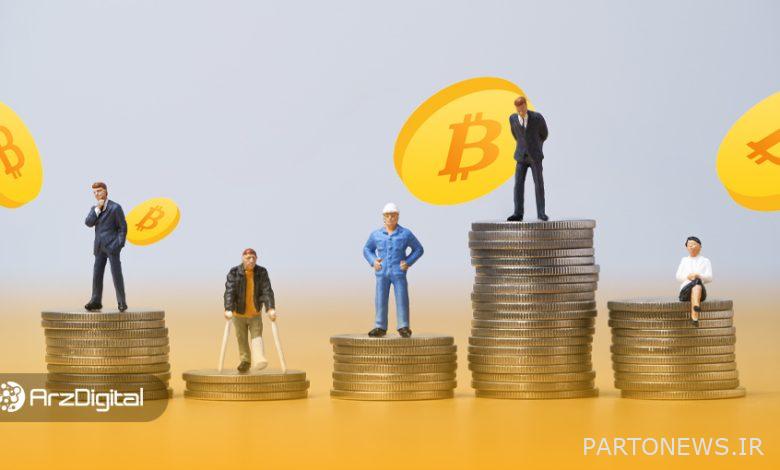
We live in a world full of economic and political problems. The inflation rate that has affected all the countries of the world after the Covid-19 crisis has caused more damage to deprived areas and developing countries. Widespread financial instability, along with rising food and energy prices, only needed the tension of the Russia-Ukraine war to bring the international recession to the worst conditions in the past three decades.
In a situation where inflation has cut off the breath of the economy, an anti-inflationary and decentralized digital asset such as Bitcoin can appear savior; But what steps should be taken to make Bitcoin more widely accepted?
In this article, a note Haider Rafique, Chief Marketing Officer of the International Division of the OKX exchange, recently published on the BitcoinMagazine website. Rafiq briefly explains how public awareness and adoption of Bitcoin can help address economic discrimination and class disparity. Read more from Haider Rafiq.


Bitcoin; A revolution in people’s access to banking services
Economically, last year was a terrible and crazy year with unfortunate events; So, it’s natural to look back at this year and ignore the first sparks of the next big revolution in technology.
Anyone who doubts this evolution in the world of technology just needs to spend a few minutes with the artificial intelligence chatbot “ChatGPT”. This amazing chatbot can easily show how artificial intelligence can change society in the coming years.
Read more: Definition of Bitcoin from the point of view of ChatGPT, the controversial artificial intelligence these days
Different market cycles come and go; But the innovations that are made today bring the lasting ability to transform the way of life in the future to Armaghan. However, the unfortunate part of the story that is less discussed is that many people do not take advantage of technological advances.
Approximately 1.5 billion people around the world are unbanked and do not have access to a modern financial system. In times of economic recession, these people have little chance of improving their basic living standards, let alone being able to use new technologies that could improve their lives.
Most of the unbanked people live in developing countries. Meanwhile, the widespread and severe inflation of 2022 affected the developing countries the most, and apparently, it is not going to disappear soon. According to International Monetary Fund (IMF) estimates, inflation in 2023 in emerging markets and developing economies will be almost twice that of advanced markets and economies.
Read more: What are inflationary assets and anti-inflationary assets?
Last year, we saw horrific examples of unprecedented inflation. For example, the annual inflation in Turkey reached 85% and Lebanon spent the year 2022 with an annual inflation of more than 100%. In these countries, repressive and interventionist financial policies led to a decrease in people’s access to reliable banking services by creating political crises.
There are various reasons for reducing the access of the vulnerable to financial and economic well-being. Some of the factors affecting economic discrimination include the underlying problems in traditional financial systems and the wrong policies of many governments.
Bitcoin; Lifeboat in economic turmoil
Bitcoin can help solve this problem. Although there is no definitive cure for economic problems, with Bitcoin we can increase financial inclusion and economic equality for the unbanked. The following three main pieces of evidence can prove Bitcoin’s transformative role:
- Bitcoin is a money that does not need an intermediary to be transferred around the world: The Bitcoin network is decentralized to users around the world and is not controlled by any government or central government or regulatory body. Therefore, people can deposit money to each other at any time and place without the need to go to government and international banking institutions.
- Bitcoin design and planning is anti-inflationary: Bitcoin’s algorithm halves the supply of coins approximately once every four years in an event called a “halving.” This design combats inflation and property value reduction in this network by reducing the amount of supply compared to demand.
- Bitcoin is an open-source, decentralized, permissionless protocol: Anyone with internet access can create a bitcoin account with a few clicks. This user account does not require paperwork or obtaining permission from judicial and banking authorities. This feature can transform the financial and economic life of people who do not benefit from traditional banking services.
However, to realize the potential of Bitcoin, there is a huge information gap that needs to be filled. For this reason, we must first educate people about the nature and goals of Bitcoin and remind them of some examples of Bitcoin’s achievements and functions.
Additionally, we must fight for policies that allow us to take advantage of all the unique benefits of Bitcoin technology. Thus, we can create the best ecosystem for the efficiency of Bitcoin to effectively and favorably witness the change in the economic system.
Increasing Bitcoin adoption through education
Currently, the economy around the world is facing massive obstacles and problems and has reached a dead end in some cases. This space could be ideal for Bitcoin fans to jump in and push for greater acceptance of Bitcoin as a store of value and payment technology.
However, the problem is that many ordinary people do not have a proper understanding of Bitcoin. In the past year, events such as the sharp fall of the crypto market and the bankruptcy of the crypto investment company “Three Arrows Capital” and the fall of the FTX exchange have also been effective in creating a negative attitude and mistrust of people towards Bitcoin and digital currencies.
read more: Which major companies accept Bitcoin and digital currencies?
2021 ended with the total value of the crypto market growing to $3 trillion. Exactly one year later, in the last month of 2022, this amount decreased to 870 billion dollars.
Also, interesting to know According to statistics In March 2022, about 50% of Americans had a neutral or positive view of Bitcoin and digital currencies; But now only 8% of Americans still think positively about digital currencies. Worse, 43% have a negative and pessimistic approach to these assets.
Unfortunate events in the world of digital currencies, such as financial scandals and bankruptcies, will probably slow down the adoption of Bitcoin for several years. One of the main reasons for this is the lack of sufficient knowledge and awareness of the mechanism of digital currencies, which can be effective in fueling rumors and damaging the credibility of Bitcoin technology.
In such a situation, it is the duty of Bitcoin fans and everyone active in the digital currency industry to improve the level of awareness and public understanding of Bitcoin.
The increase in public knowledge in the field of Bitcoin and new technologies in the crypto industry, on the one hand, makes people more aware of the possible risks and, on the other hand, makes the capacities hidden in these assets more obvious. This education and awareness process should be done with the aim of creating the next wave of Bitcoin and blockchain technology adopters.
Proving the applicability of Bitcoin
Awareness is only half the battle. Widespread adoption of Bitcoin will happen when people are convinced that the technology has real applications in their daily lives. Reasoning and theorizing is interesting; But we live in a world where people only value what is really useful to them.
The good news is that after the events of last year, many practical applications of Bitcoin have been revealed for people. Next, we will mention some useful features of Bitcoin:
- Transfer without intermediaries, fast and low cost Money: The Bitcoin protocol allows for the transfer of value at any time and place in the world. Meanwhile, users no longer need expensive traditional international payment networks or cumbersome banking processes.
- Avoid censorship: No person or entity can prevent others from using the open source Bitcoin protocol. Thus, in the era of legal movements and disputes that cut off access to banking services, Bitcoin can be a way forward.
- Anti-inflation reserve value: Bitcoin has no central authority or authority to monitor; That is, no person or institution can change the supply of this digital asset or reduce its value by causing inflation.
Spreading awareness about the benefits of Bitcoin and combating false rumors related to this digital asset requires a lot of follow-up and tenacity. For every Bitcoin fan, the hard work begins now.
Every journey is accompanied by problems and failures; But if we really believe in Bitcoin, we should do our best to improve the level of awareness and access of the general public to this unique technology; Because this is the only way we can make people familiar with the capabilities of Bitcoin and prepare the ground for the increasing acceptance of this revolutionary technology.