What is Co-amoxiclav for?
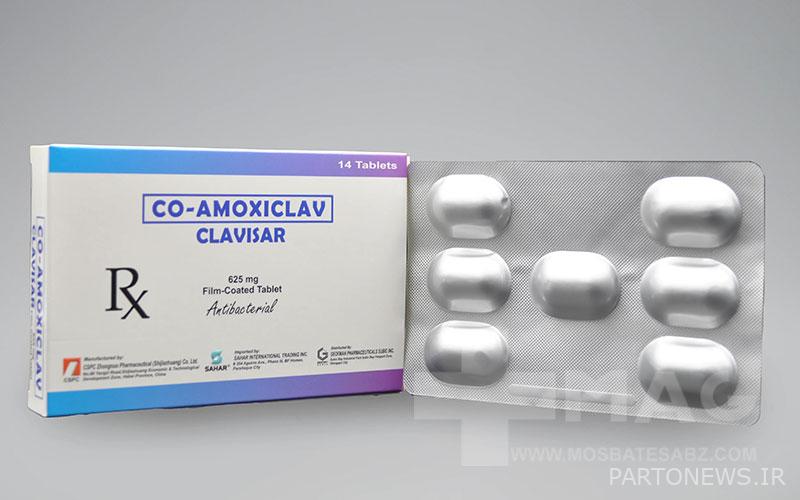
Infections are one of the basic health and medical issues in modern global societies. From the simplest everyday infections to serious and complex infections that may lead to serious consequences and problems for human health, they all need treatment. Amoxiclav is known as a combination drug that consists of the combination of two active substances named amoxicillin and clavulanic acid. This compound is very effective in fighting bacteria and preventing the development of bacterial resistance to its drug. In other words, Amoxiclav is considered as one of the essential drugs in the treatment of bacterial infections.
What we read in this article
Pharmaceutical forms of Coamoxiclav
Coamoxiclav drug in the form of oral suspension (125 mg/31.25 mg) 5 ml, (200 mg/28.5 mg) 5 ml, (250 mg/62.5 mg) 5 ml, (400 mg) (57 mg) 5 mL and (600 mg/42.9 mg) 5 mL, 250 mg/125 mg, 500 mg/125 mg, and 875 mg/125 mg, extended-release tablets 1000 mg / 62.5 mg, 200 mg / 28.5 mg chewable and 400 mg / 57 mg available.


Uses of coamoxiclav tablets
The combination of amoxicillin and clavulanic acid is used to treat certain infections caused by bacteria, including ear, lung, sinus, skin and urinary tract infections. Amoxicillin is in a class of drugs called penicillin-like antibiotics, which work by stopping the growth of bacteria. Clavulanic acid is in a class of drugs called beta-lactamase inhibitors and works by preventing the degradation of amoxicillin by bacteria. Antibiotics are not effective for colds, flu, or other viral infections. Using antibiotics when they are not needed increases the risk of developing an infection that later becomes resistant to antibiotic treatment.
Uses of coamoxiclav in adults
- Lower respiratory tract infection
- Acute bacterial sinusitis
- Animal or human bite wound
- Erysipelas
- Pyelonephritis
- skin abscess
- diabetic foot
- Group A streptococcus, chronic carrier
Uses of Coamoxiclav in children
- Infection for newborns and infants less than 3 months
- Acute bacterial otitis media
- Sinusitis, lower respiratory tract infections and more severe infections

Pharmacological effects and mechanism of action of Co-amoxiclav drug
Amoxicillin binds to penicillin-binding proteins, thus inhibiting the final transpeptidation step of peptidoglycan synthesis in the bacterial cell wall. The addition of clavulanate inhibits beta-lactamase-producing bacteria and allows amoxicillin to have a broader spectrum of action. It is a semi-synthetic antibiotic with a broad spectrum of bactericidal activity and covers Gram-negative and Gram-positive microorganisms. It is also not effective against Mycoplasma and Legionella species. The maximum concentration of this drug is 8-22 mcg/ml (amoxicillin) and 0.8-2.6 mcg/ml (clavulanic acid) and urinary excretion, unchanged 50-70% (amoxicillin), 25-40% (clavulanic acid) clavulanic) takes place.
Co-amoxiclav dosage
The combination of amoxicillin and clavulanic acid is available as a tablet, a chewable tablet, an extended-release (long-acting) tablet, and a suspension (liquid) for oral use. Tablets, chewable tablets, and suspensions are usually taken every 8 hours (three times a day) or every 12 hours (twice a day) with meals. The extended-release tablets are usually taken with a meal or snack every 12 hours (twice a day). To help you remember to take Co-amoxiclav, take it at roughly the same times every day.
Dosage of Coamoxiclav tablets in adults
- Mild to moderate lower respiratory tract infection 125.500 mg orally every 12 hours or 125.250 mg orally every 8 hours for 10 days. Also, for severe lower respiratory tract infection, 125/875 mg every 12 hours or 2000 mg (2 extended-release tablets) orally for 7 to 10 days is prescribed.
- Chronic obstructive pulmonary disease 500 mg orally every 8 hours.
- Acute bacterial sinusitis, 2000 mg (2 extended-release tablets) orally every 12 hours for 10 days.
- Animal or human bite wound, 875 mg orally every 12 hours or 500 mg every 8 hours for 3 to 5 days.
- For erysipelas, take 875 mg orally every 12 hours or 500 mg every 8 hours for 7 to 10 days.
- Pyelonephritis (beta-lactamase-producing strains of Escherichia coli, Klebsiella, and Enterobacter), 875 mg orally every 12 hours or 500 mg every 8 hours.
- Skin abscess (beta-lactamase-producing strains of Staphylococcus aureus, E coli and Klebsiella species), 875 mg every 12 hours orally.
- Diabetic foot (mild to moderate cellulitis, topical), 2000 mg (2 extended-release tablets) orally every 12 hours for 7 to 14 days.
- Group A streptococcus, chronic carrier 40 mg/kg orally every 8 hours for 10 days. Also, the total intake should not exceed 2000 mg.
Dosage of Coamoxiclav tablets in children
- The general infection treatment dose is used for susceptible isolates of lower respiratory tract infections, acute bacterial otitis media, sinusitis, skin and skin structure infections, and urinary tract infections in children less than 3 months of age. Dose of 30 mg/kg divided every 12 hours, based on the amoxicillin component, use 125 mg/31.25 mg per 5 ml of oral suspension.
- This drug is used for acute bacterial otitis media caused by beta-lactamase-producing isolates of H influenzae and M catarrhalis. Recommended dose for more than 3 months or 40 kg, 45 mg/kg divided every 12 hours; Use 200 mg / 28.5 mg per 5 ml or 400 mg / 57 mg per 5 ml suspension.
- This medicine is suitable for lower respiratory tract infections and sinusitis caused by beta-lactamase-producing isolates of H influenzae and M catarrhalis.
- Over 3 months and under 40 kg, the recommended dose is 45 mg/kg orally every 12 hours, ranging from 200 mg/28.5 mg per 5 mL or 400 mg/57 mg per 5 mL. Use a liter of suspension.
- Less frequent infections in children older than 3 months and less than 40 kg, 25 mg/kg orally every 12 hours as 200 mg/28.5 mg per 5 mL or 400 mg/57 mg per 5 mL Use a liter of suspension.
Time to take coamoxiclav tablets
Take Co-amoxiclav as prescribed by your doctor, do not take more or less than prescribed by your doctor. Chew the chewable tablets thoroughly and then swallow them whole. Before each use, shake the liquid of this medicine well so that the medicine is evenly mixed. The regular 250 mg tablet and the 250 mg chewable tablet contain different amounts of clavulanic acid and should not be used interchangeably. If you stop taking this medicine too soon or skip doses, your infection may not be completely cured and the bacteria may become resistant to antibiotics.
Precautions
- Different tablets of this drug are not interchangeable because the ratio of amoxicillin to clavulanate is different.
- Extended-release tablets are not used in renal failure (CrCl <30 mL/min).
- The safety and effectiveness of Coamoxiclav extended-release tablets in people under 16 years of age have not been established. (Unknown)
- risk of Clostridium difficile-associated diarrhea (CDAD); Consider in patients who develop diarrhea after taking antibiotics. CDAD develops more than 2 months after antibiotic treatment. In case of suspicion, stop the drug immediately and perform appropriate treatment with electrolyte fluid, protein supplement and C difficile antibiotic treatment.
- Prescribing treatment in the absence of proven, strongly suspected bacterial infection or prophylactic indication is unlikely to benefit the patient and increases the risk of developing drug-resistant bacteria. There is a risk of bacterial or fungal super-infections, if suspected, stop the drug immediately and take the appropriate treatment.
- A high percentage of patients with mononucleosis have been reported to have skin rashes during treatment. Ampicillin class antibiotics are not recommended in these patients.
- Use caution in liver failure. Hepatic dysfunction (rare) is more common in older people or men, and long-term treatment may increase the risk.
- Serious and sometimes fatal hypersensitivity (anaphylactic) reactions have been reported. These reactions are more likely to occur in people who have a history of sensitivity to penicillin or a history of sensitivity to several allergens. Previous hypersensitivity reactions to penicillins, cephalosporins, or other allergens should be investigated before treatment is initiated. If an allergic reaction occurs, stop the treatment and start the appropriate treatment.
- Treatment in some patients causes severe cutaneous adverse reactions (SCAR), such as Stevens-Johnson syndrome (SJS), toxic epidermal necrolysis (TEN), drug reaction with eosinophilia and systemic symptoms (DRESS), acute generalized exanthematous pustulosis (AGEP). If patients develop skin rashes, they should be closely monitored and if the lesions progress, their use should be stopped.
Contraindications to Coamoxiclav
- Allergy to penicillin
- Previous history of cholestatic jaundice or liver dysfunction associated with amoxicillin and clavulanate
- Long-term release: hemodialysis patients and severe renal failure (CrCl <30 mL/min)
Co-amoxiclav side effects
Diarrhea, mycosis, nausea, rash, vomiting, vaginitis, candidiasis, etc. are some of the side effects of coamoxiclav. If any of these side effects do not improve or get worse, tell your doctor. Most people who take this drug do not experience serious side effects. However, if serious side effects occur, such as constipation or severe diarrhea, worsening of the disease after taking the drug, bleeding in the digestive system (stomach, intestine or esophagus), etc., stop taking the drug and see a doctor.
- Diarrhea (varies depending on dose and diet)
- diaper rash
- Mycosis
- nausea
- rush
- Vomit
- loose stools
- candidiasis
- vaginitis
- Hypersensitivity reactions
- anaphylaxis
- Anemia
- Thrombocytopenia
- Leukopenia
Coamoxiclav drug interactions
Drug interactions may change how your medications work or increase your risk of serious side effects. Before going to the doctor, make a list of the chemical and herbal medicines you use and show them to him. Do not take antibiotics or other medicines without consulting your doctor. Also, do not reduce, increase or stop the prescribed dose, sudden stop can cause the return of the disease or inflammation in the patient. In the following, we will examine some of the common drug interactions of Co-amoxiclav.
- Class X interactions (avoidance): B. G. (intravesical), cholera vaccine
- Reducing the effects of drugs by coamoxiclav: aminoglycosides, BTH (intravesical), BTH vaccine (immunogenic), cholera vaccine, lactobacillus and estriol, mycophenolate, sodium picosulfate, typhoid vaccine
- Enhancement of drug effects by coamoxiclav: dichlorophenamide, methotrexate, vitamin K antagonist
Co-amoxiclav use during pregnancy and breastfeeding
Reproduction studies in animals (rats at doses up to 10 times human) with oral and injectable drugs have shown no teratogenic effects. In a single study in women with premature rupture of membranes (pPROM), it was reported that prophylactic treatment with this drug may be associated with an increased risk of necrotizing enterocolitis in infants. As with all medications, its use during pregnancy should be avoided unless deemed necessary by a physician.
The effect of coamoxiclav on breastfeeding
Ampicillin class antibiotics are excreted in human milk. Therefore, caution should be exercised when administering the drug to a nursing mother. However, this drug may be prescribed by a doctor during breastfeeding. With the exception of the risk of sensitization, with the excretion of small amounts in breast milk, there are no known harmful effects on the breast-fed infant.
Co-amoxiclav storage conditions
Coamoxiclav should be stored at room temperature and away from light and moisture. Also, all chemical and herbal medicines should be kept out of the reach of children and animals.
The last word about Coamoxiclav
Amoxiclav drug, as described in this article from Positive Green Online Pharmacy magazine, is a drug for the effective treatment of infections, and by having the prescription in hand and controlling its use, faster and better recovery can be achieved for patients. By affecting the growth and development of bacteria, this drug is considered one of the main drugs in modern medicine, and we hope that this article has helped doctors and patients better understand the use and benefits of Amoxiclav. Patients should pay attention, if symptoms of infection or inflammation appear, see a doctor and avoid self-administration of antibiotics.
Site source: Medscape